
How to select the best cryogenic vessel
How cryopreservation could futureproof frogs
Considerations for your storage facility
We understand the importance of maintaining the viability of your samples by utilising cryogenic temperatures to store them long term, but what about the environment of your containers and the rooms they are in?
Storage vessel
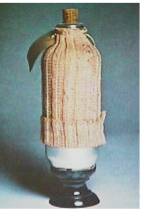 Let’s look first of all at the freezer in which you are storing your valuable samples, what are the key elements to maintain it’s integrity? Cryogenic vessels consist of two containers, the inner holding your samples and the liquid with the outer providing a vacuum space to reduce heat ingress into your sample area. Typically, the inner vessel is wrapped with insulation paper and foil to create a very slow heat path to the inner tank inside a vacuum space to reduce induction of heat. The vessel must be manufactured using the latest proven technology in vacuum strength with the ability to remove any threat of moisture within the vacuum space to ensure longevity of the vacuum. Very early cryogenic vessels, like the original built by James Dewar in 1892 (shown in picture) was made of copper to enhance conductivity of the inner vessel, technology is continually improving! It was not until the early ‘60’s when multi-layer insultation was introduced.
Protecting your samples
We know that the key temperature of most biologic products is the Glass Transition (Tg) temperature which in the case of water is -132°c, and since most biological products have a high volume of water this temperature is the used as the benchmark.
Effects of cryopreservation on viability and functional stability of an industrially relevant alga
|
Duration of storage |
Storage temperature |
Viability levelb |
|
24 h |
−15 °C |
65 ± 12 |
|
−80 °C |
98 ± 3 |
|
|
−196 °C |
97 ± 6 |
|
|
1 month |
−15 °C |
<1* |
|
−80 °C |
44 ± 21 |
|
|
−196 °C |
97 ± 9 |
|
|
4 months |
−15 °C |
<1* |
|
−80 °C |
28 ± 6 |
|
|
−196 °C |
97 ± 10 |
*https://rdcu.be/cdUFM- Kapoore, R.V., Huete-Ortega, M., Day, J.G. et al. Effects of cryopreservation on viability and functional stability of an industrially relevant alga. Sci Rep 9, 2093 (2019). https://doi.org/10.1038/s41598-019-38588-6
Below Tg water does not exist as a liquid and thermally driven reactions are slowed to almost zero. Most samples can be stored 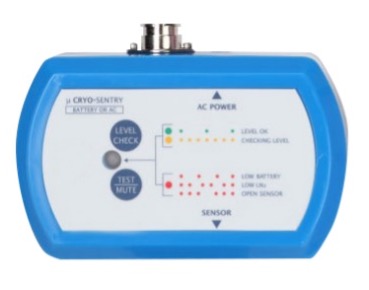 within the liquid however some are stored in the vapour phase (see our paper on “How to select the best cryogenic storage vessel”) but still below their Tg..
Whatever method of storing monitoring the temperature of your vessels and ideally the liquid nitrogen level within it will provide the security that your samples are kept safely in cell suspension.
Key points:
Liquid level monitoring - Know you can go away for long weekend!!
Temperature monitoring - Know your sample is cold enough!
Audible/remote alarms - Most cryogenic facilities are away from main lab. Failures happen during out of office hours
Test your alarms - Ensure that if you have a failure you will be informed!
Cryo storage area
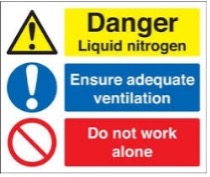 Every area housing liquid nitrogen must be considered a cryogenic room and precautions must be taken to provide safety for the users. Liquid nitrogen expands by a ratio of 1:696 in its gaseous form, this can result in a sudden depletion of oxygen when a spillage occurs. You should therefore consider the following when storing any amount of liquid nitrogen:
Size of the room – Volume of room compared to volume of LN2 stored.
Extraction system – Is the air able to circulate freely in the space? Consider normal air paths in room.
Ease of access – Is it easy to locate your samples without fear of bumping into other vessels?
Do you have Oxygen depletion monitors in place? – These should be visual and audible outside the room
Do you have an emergency plan in place? – First aiders with knowledge of cryogenic burns, emergency procedure plans.